Management

Back Safety: Standing

Choose a preferred language

Good posture decreases back pain by reducing strain on your muscles. Remember to check your posture, using the self-help tips below, every time you move or adjust position.


Standing

  • To help keep your spine straight, line up your ears, shoulders, and hips.

  • Stand with your feet shoulder-width apart. Or place one foot slightly in front of the other.

  • Keep your knees relaxed and stomach muscles slightly flattened.

  • Let your arms hang naturally down the sides of the body.
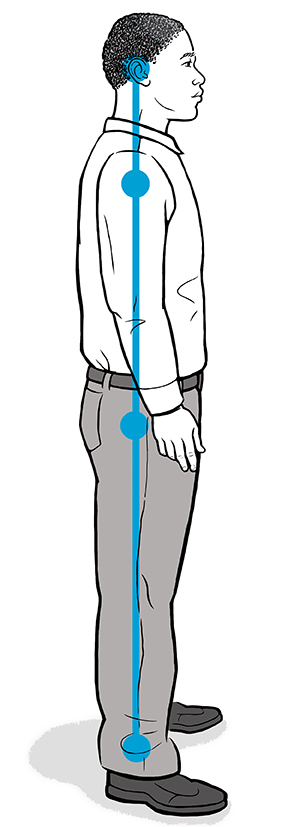
    Side view of man standing with ears, shoulders, hips, and ankles aligned.


Bending over

  • Bend at your hips and knees.

  • Don’t bend at your waist or round your back.

  • Rest your weight on your arms if possible.


Working

  • When standing for a long time, shift your weight from your toes to your heels, or one foot to the other.

  • When reaching for objects over your head, use a stepladder. When you can’t, be sure to tighten your stomach muscles to keep your back from arching. 

© 2000-2026 The StayWell Company, LLC. All rights reserved. This information is not intended as a substitute for professional medical care. Always follow your healthcare professional's instructions.
Related Articles
Read more →
Orthopedics
Back Safety: Basics of Good Posture

Your body works best when it's correctly aligned. Aim for good posture throughout the day.

Read more →
Orthopedics
Back Safety: Sitting

Sitting can strain your back if you don't do it right. Learn the right moves to protect your back.

Read more →
Brain Health
Caring for Your Back Throughout the Day

To take care of your back, try to warm up before you move and shift positions often.

Read more →
Orthopedics
Back Safety: Getting Into and Out of Bed

Good posture protects your back when you sit, stand, and walk. It's also important while getting into and out of bed.